



A Coffee Conversation in Johor Bahru
Not long ago, I was catching up with a second-generation business owner in Johor Bahru over coffee. He was in his early thirties and ran a stainless steel fabrication company. During our conversation, he shared that his factory was in the midst of relocation and renovation.
At first, I expected him to speak with excitement about the future. A new factory often signals expansion, renewed capability, and fresh ambition. Instead, he looked at me and said:
“That’s it for this business. I’m just running it as a day-to-day operation. I can’t expect any growth from it.”
He described the stainless steel fabrication industry as a sunset industry — stagnant, highly competitive, and increasingly vulnerable to larger players with better technology. In his view, it was only a matter of time before smaller operators like his would become obsolete.
It was disheartening to hear such a young entrepreneur speak with so much resignation. Yet the more important question was not whether the industry was difficult, but whether he had truly explored the possibilities within his terrain.
A Hidden Opportunity in Plain Sight
I listened quietly as he explained that many stainless steel industry players in Johor Bahru regularly crossed the border into Singapore to source spare parts.

Daily congestion on the causeway between Singapore and Johor Bahru, Malaysia. Picture courtesy of https://paultan.org/
That was when an idea began to form.
I asked whether he knew the brand that most of these companies purchased from. He did. I then suggested that he consider approaching the brand to apply for exclusive distribution rights in Johor Bahru.
Since his new factory was already under renovation, he could allocate a small display room as a showroom for the brand’s spare parts. If successful, this would give local industry players a reason to visit his company rather than continue sourcing from Singapore.
After all, which business owner would prefer to incur additional transportation costs, taxes, and time delays when the same products could be obtained directly in Johor Bahru?
From Purchaser to Market Gatekeeper
The opportunity was not simply about selling spare parts. It was about changing his role in the market.
This brought to mind the strategic idiom 反客為主, one of the legendary 36 Stratagems. It describes the art of turning a passive or dependent position into a dominant and controlling one. Instead of remaining a purchaser who relied on Singapore suppliers, he could become the exclusive distributor for the Johor Bahru market.
That would shift him from being one of many buyers to being the key local source for a critical supply chain need. I could sense that this perspective meant something to him.

Promoting a pawn to a queen grants maximum offensive and defensive versatility, allowing the new piece to control multiple diagonals and files simultaneously.
The Terrain that Shapes the Game
This is closely related to Terrain (地), one of Sun Tzu’s Five Factors in The Art of War. Terrain is not merely physical geography; it refers to positioning. The right positioning gives an army — or a business — a significant competitive advantage over its peers.
Sun Tzu wrote:
“故善戰者,至人而不至於人”
In essence, this means that a skilful strategist dictates the pace and compels others to respond. In business, controlling a key market position can allow a company to influence how industry players operate around it.
At Dalmatian, this is how we often view branding and marketing strategy: not merely as communication output, but as a question of market positioning. A business may operate in a challenging industry, yet still create advantages by identifying a role that customers, partners, and competitors naturally respond to.
Building Momentum through Collaboration
The stainless steel fabrication industry in Johor Bahru is also highly collaborative. When one company faces delivery challenges, it often seeks assistance from other players. Naturally, the company with greater resources, faster delivery capabilities, and more reliable execution tends to receive priority.
This creates a virtuous cycle. More projects generate more revenue, which enables investment in better machinery. Better machinery improves precision, quality, and efficiency, which in turn attracts larger and more demanding projects.
Over time, this can transform a modest fabrication company into one of the leading players in its market. In his case, becoming a central hub for spare parts could have been that strategic lever.
Looking Beyond the Annual Tender
As we explored the idea further, he began asking more questions about how he might negotiate with the brand principal to become their exclusive distributor in Johor Bahru. The conversation had shifted from resignation to possibility.
I then asked what type of customers he most wanted to serve. He replied that he was targeting semiconductor manufacturers.
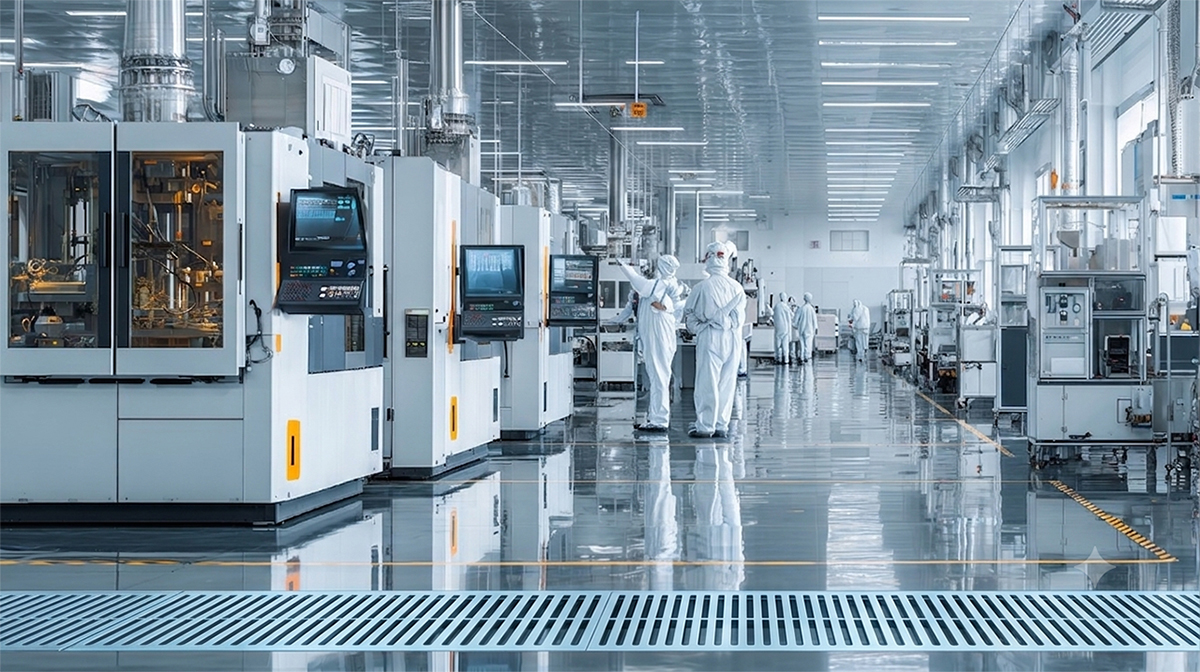
These manufacturers often use stainless steel drain grates in their cleanrooms and typically issue annual tenders for replacement work to meet ISO standards. He explained that installation accounted for approximately 60–70% of the total sales value.
That immediately triggered another idea.
I suggested that after winning the initial tender, he could offer the client a subsequent annual maintenance contract at only 30–40% of the original selling price.
He paused, visibly surprised:
“How can we offer only 30–40% when our material and workmanship already cost about double that price?”
Solving the Client’s Real Pain Point
I pointed out that the client’s real pain point was not simply replacing drain grates every year. Their primary objective was to maintain ISO compliance.
To achieve that, the drain grates needed to remain qualified and compliant with the required standards. Replacing the entire system annually might not be the most efficient solution.
For example, if a manufacturing plant normally spent $100,000 annually on full drain grate replacement, a maintenance-based approach might allow them to spend only about 30% of that amount each year while still meeting ISO requirements.
I explained that he could use a portion of that fee to engage or recruit a qualified ISO auditor to evaluate the installation every two to three months. The auditor’s findings could be documented and submitted as part of the client’s ISO compliance records.
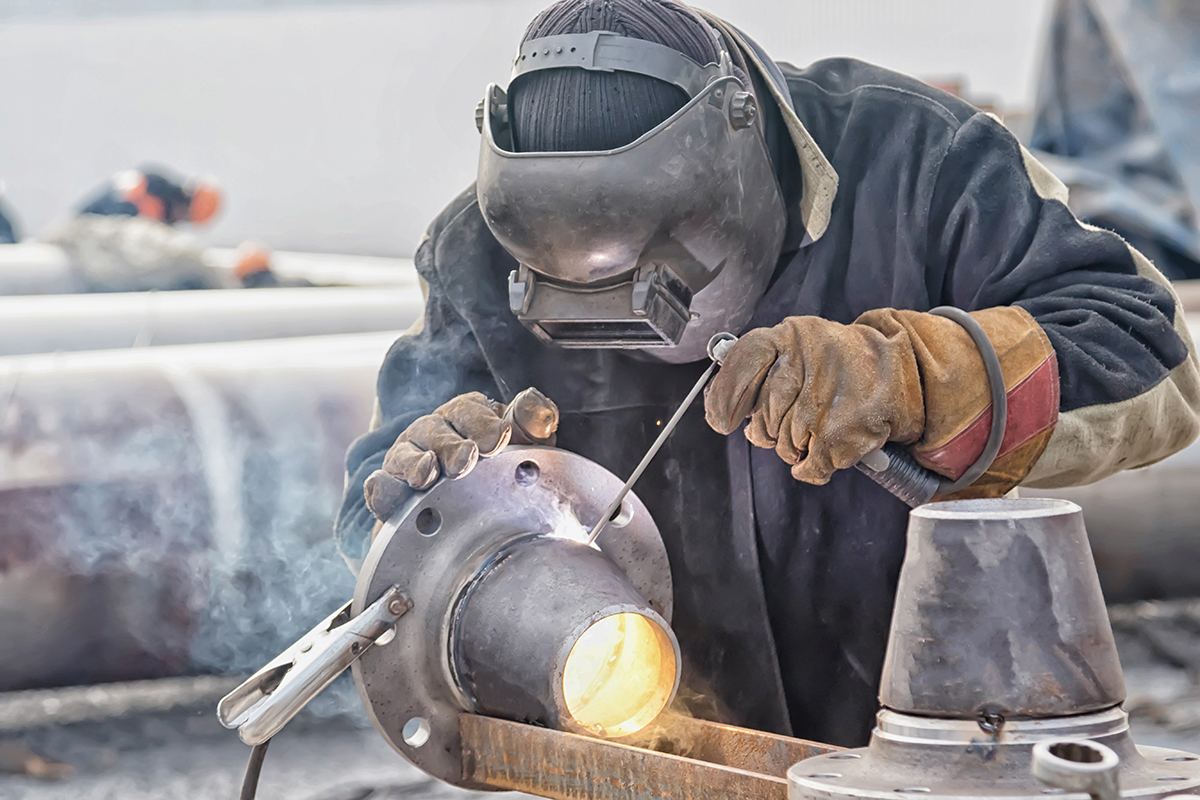
If any specific section failed to meet standards, only that section would need to be replaced. This would create a solution that was both cost-effective for the client and profitable for the service provider.
An Offer Competitors would Struggle to Match
This maintenance-based model would create several advantages for the semiconductor manufacturer. It could reduce annual expenditure by a significant margin while eliminating the need for repeated tender preparation, evaluation, and award processes.
From a competitive standpoint, this would become an offer that competitors would find difficult to match. Traditional competitors focused solely on replacement work would struggle to compete with a model that delivered both lower cost and ongoing compliance assurance.
From a branding and marketing perspective, the shift here is significant. The entrepreneur was no longer competing solely on fabrication capability; he was reframing his business around a clearer value proposition: helping clients maintain compliance more efficiently and cost-effectively.
This aligns with another principle from The Art of War:
“通行者,先居高陽,利糧道,以戰則利”
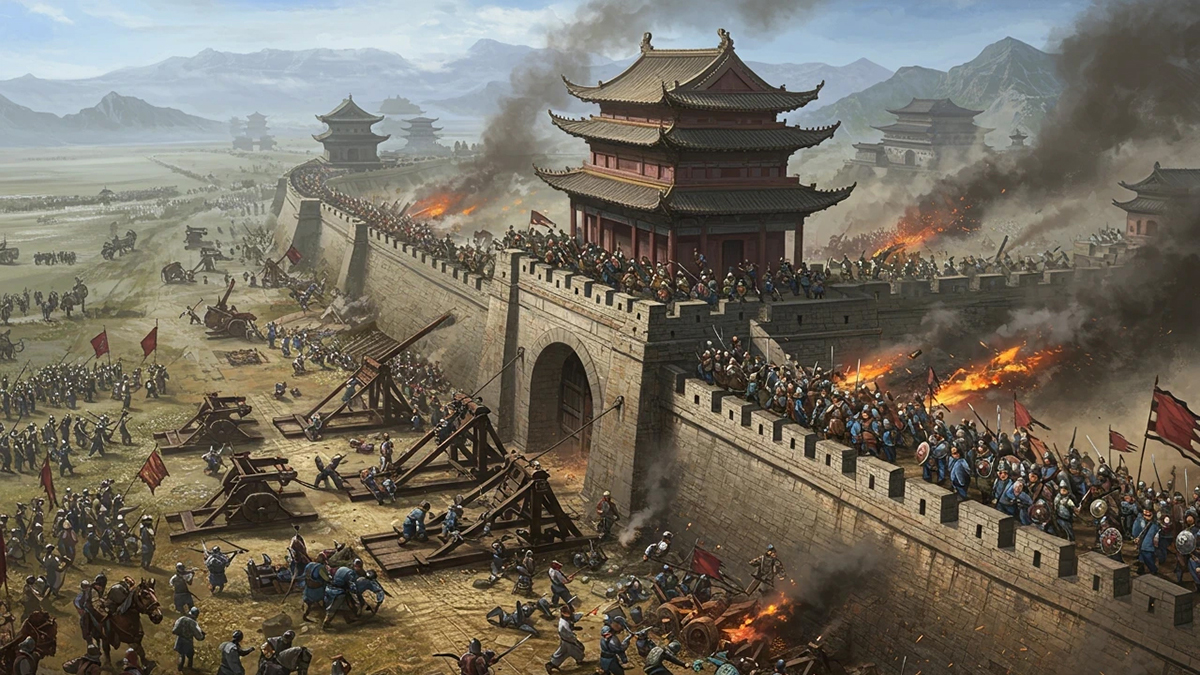
Historically, defenders of a castle usually have massive tactical, logistical, and psychological advantages during a siege. Picture courtesy of https://craiyon.com/
In essence, this means that occupying an advantageous position can force competitors into a disadvantageous one. By redefining the service model around the client’s true objective, the entrepreneur could have created a position of strength that others would struggle to challenge.
The Real Lesson from the Conversation
What struck me most about this conversation was how quickly the perception of a “sunset industry” began to change once we shifted the focus from limitations to positioning.
The industry itself had not changed overnight. The market conditions remained challenging. Larger competitors still existed, and technology would continue to evolve.
But two strategic possibilities emerged simply by asking different questions: how could he move from being a buyer to becoming a market gatekeeper, and how could he solve the client’s real pain point instead of merely selling a product?
These questions transformed the discussion from one of stagnation to one of opportunity.
A Final Reflection
By the end of our coffee session, I could see that the young entrepreneur was beginning to view his business differently. The industry had not suddenly become easy, but it no longer seemed entirely hopeless.
That is the power of strategic thinking.
At Dalmatian, we believe that branding and marketing are not merely about visibility; they are about helping businesses discover where they can create meaningful advantage. Sometimes, the breakthrough does not come from changing industries entirely, but from seeing the same industry through a sharper strategic lens.
A sunset industry does not automatically mean a sunset business. With the right positioning, a clearer value proposition, and a willingness to look beyond conventional assumptions, a business can uncover new terrain from which to compete and grow.

“What position could allow us to dictate the game?”
In other words, this question challenges us to identify where our business can move from merely participating in the market to shaping the conditions under which the market operates.