


“The greatest danger to an army is not the absence of soldiers. It is when the soldiers no longer know what they are fighting for.”
Some consultation sessions end with a solution. Others leave me with a question that lingers long after I walk out of the office.
One such question has followed me for years.
Why do some people walk into work every morning as though they are simply waiting for the day to end?
At first, I thought it was about salary, workload, or management. But after working with businesses across different industries, I gradually realised that those were often only symptoms of something much deeper.
Very often, the problem isn’t that people dislike working. Somewhere along the way, they simply stop understanding why their work matters.
Many business owners would describe this as an employee engagement issue. In my experience, however, engagement is often the symptom rather than the cause. More often than not, the deeper issue is that people have lost sight of the purpose behind their work.
To me, that is one of the greatest risks any business can face.
Not because productivity slows, but because when people stop thinking, they begin simply following.
Busy… But Going Nowhere:
When Employees Lose Their Sense of Purpose
A few years ago, I was engaged by a business in the recycling and waste collection industry. As I spent time observing the company, something felt unusual.
The office was busy. Phones were ringing, documents moved constantly from one desk to another, and everyone seemed occupied with their own responsibilities. On the surface, everything appeared to be functioning normally. Yet the longer I observed, the more I felt that something wasn’t quite right.
During conversations with the team, I began asking a simple question.
“Why do you carry out this process?”
The answers surprised me.
Most could explain what they were doing. Very few could explain why they were doing it.

The tasks had gradually become routines passed down from the founder. People followed instructions because that was how things had always been done. Nobody questioned whether the process still served its purpose, nor did anyone stop to review whether there might be a better way.
That wasn’t a criticism of the employees.
It was a concern for the company.
Because when people no longer understand the purpose behind what they do, they stop taking ownership of the outcome. And once ownership disappears, risk quietly takes its place.
Sometimes that risk is nothing more than inefficiency. At other times, it can damage customer trust, weaken the company’s reputation, or slowly erode its culture from within.
Looking Beyond Resumes:
Matching People to the Right Roles
Instead of reviewing technical competencies, I proposed something different.
Let’s interview everyone again.
But this time, not to evaluate their skills.
Let’s understand their behaviour instead.
How do they naturally communicate?
How do they solve problems?
What environment allows them to perform at their best?
Nine interviews later, the picture became much clearer.

Some individuals who naturally enjoyed engaging people were spending every day behind a desk. Others, whose strengths lay in structure and analysis, were expected to handle responsibilities that required constant interaction.
More importantly, many admitted something that immediately caught my attention.
They had never really understood the objective behind the work they were asked to do.
They simply followed instructions because that was all they had ever known.
Based on the behavioural findings, I proposed a redesign of several roles — not according to job titles, but according to behavioural strengths. The founder trusted the process, and the changes were gradually implemented.
The transformation wasn’t dramatic overnight. Yet over the following months, something began to change.
Those who enjoyed connecting with people found themselves contributing to campaigns, partnerships and business development. Those who preferred structure became more effective in operational responsibilities where their strengths were naturally suited.
The office became noticeably more productive.
More importantly, people began taking ownership of their work.
When someone understands both what they are doing and why they are doing it, work no longer feels like a routine.
It becomes a contribution.
The Same Question, Different Industry
Some time later, I found myself asking the very same question again.
This time, the client was the founder of an accounting firm.
He shared a frustration familiar to many business owners.
“We just can’t seem to retain our young recruits.”
Naturally, I asked what occupied most of their time.
“Scanning receipts.”
“Data entry.”
“Keying information into the accounting system.”
The founder wasn’t wrong. Those tasks were necessary. Without accurate data, no accounting system could produce meaningful reports.
So I asked him another question.
“If you had just graduated from university… accepted a salary that barely covered your living expenses… and spent every day scanning receipts and keying data into a computer…”

“Would you genuinely look forward to coming back tomorrow?”
The room fell silent.
Fresh graduates are not expecting to become managers overnight. What they do hope for is the opportunity to learn, to grow, and to believe that today’s work is preparing them for tomorrow.
When every assignment feels repetitive, every day begins to resemble the last. Slowly, enthusiasm gives way to routine, and routine eventually becomes stagnation.
Then one day, another opportunity appears.
And they leave.
Not necessarily because another company pays more, but because another company offers a future they cannot yet see where they are.
After a long pause, the founder finally replied,
“But those tasks still need to be done.”
I nodded.
“They do.”
“But perhaps people shouldn’t spend their careers doing work that technology can now do better.”
Today, artificial intelligence is increasingly capable of handling repetitive groundwork. Instead of continuously recruiting people simply to replace those who leave, why not allow technology to handle the repetitive work and allow your people to move into responsibilities that require judgement?
Advising clients.
Interpreting information.
Building relationships.
Solving business problems.
Creating value.

Because sustainable growth is never built by endlessly replacing people.
It is built by helping people see a future worth growing into.
The General Before the Army
As I reflected on both conversations, another passage from Sun Tzu came to mind.
In The Art of War, one of the Five Factors is The General (將).
Not as a historical piece to admire, but as a practical lens.
In many ways, the qualities that Sun Tzu expected of a General mirror what we now expect of an effective leader.
Many believe leadership is about giving instructions.
I see it differently.
A leader’s greatest responsibility is to help every individual understand where they can contribute best, why that contribution matters, and how their own future grows alongside the organisation.
This reflection builds upon an earlier discussion on Terrain (地), where we explored why positioning shapes competitive advantage, just as General (將) reminds us that people shape an organisation’s future.
More than two thousand years ago, during China’s Warring States period, the renowned military strategist Wu Qi (吳起) noticed one of his soldiers suffering from a severely infected wound. Instead of asking someone else to treat him, Wu Qi personally sucked the poisonous pus from the wound.
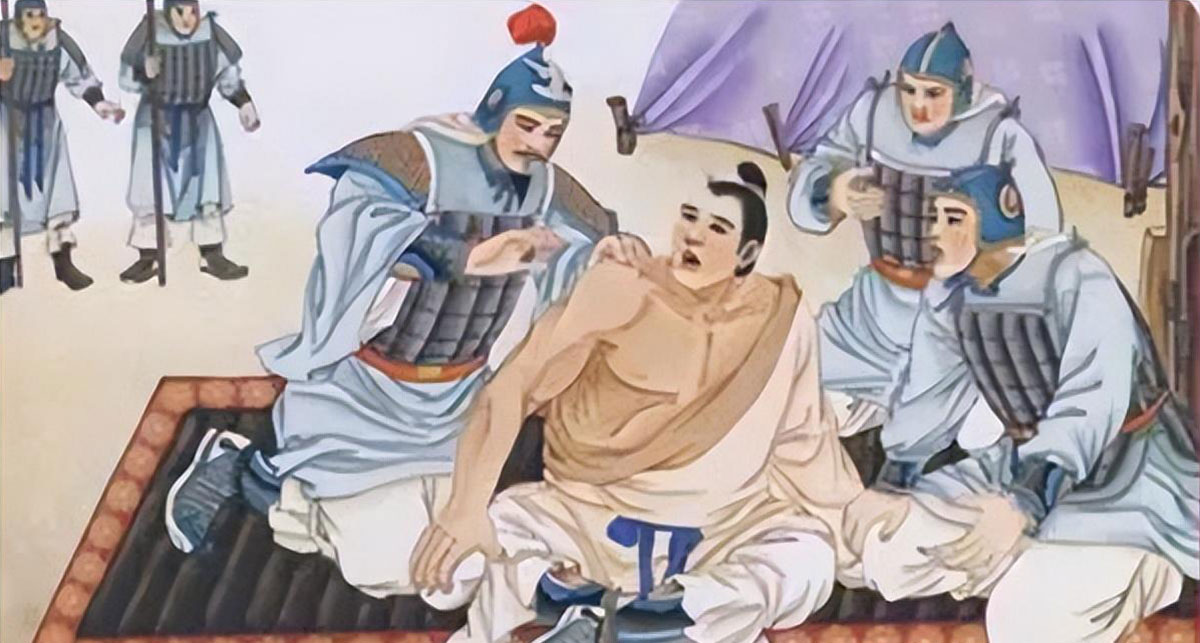
When a soldier developed a painful, swollen sore, Wu Qi (吳起) knelt and sucked out the bad blood and pus with his own mouth.
Picture courtesy of https://www.zhihu.com/
The soldier was deeply moved.
The story has survived for centuries not because of the wound itself, but because of what the act represented.
The soldier knew he mattered.
He wasn’t merely another number within the ranks.
He was someone worth caring for.
Trust was built first. Respect followed naturally, and loyalty became the outcome rather than something that could be demanded.
Today’s business leaders may never need to demonstrate their commitment in such an extraordinary way. Yet the principle remains timeless.
When people know they are valued, when their strengths are recognised, when they are trusted with ownership, and when they can genuinely see a future within the organisation, they stop working merely for a salary.
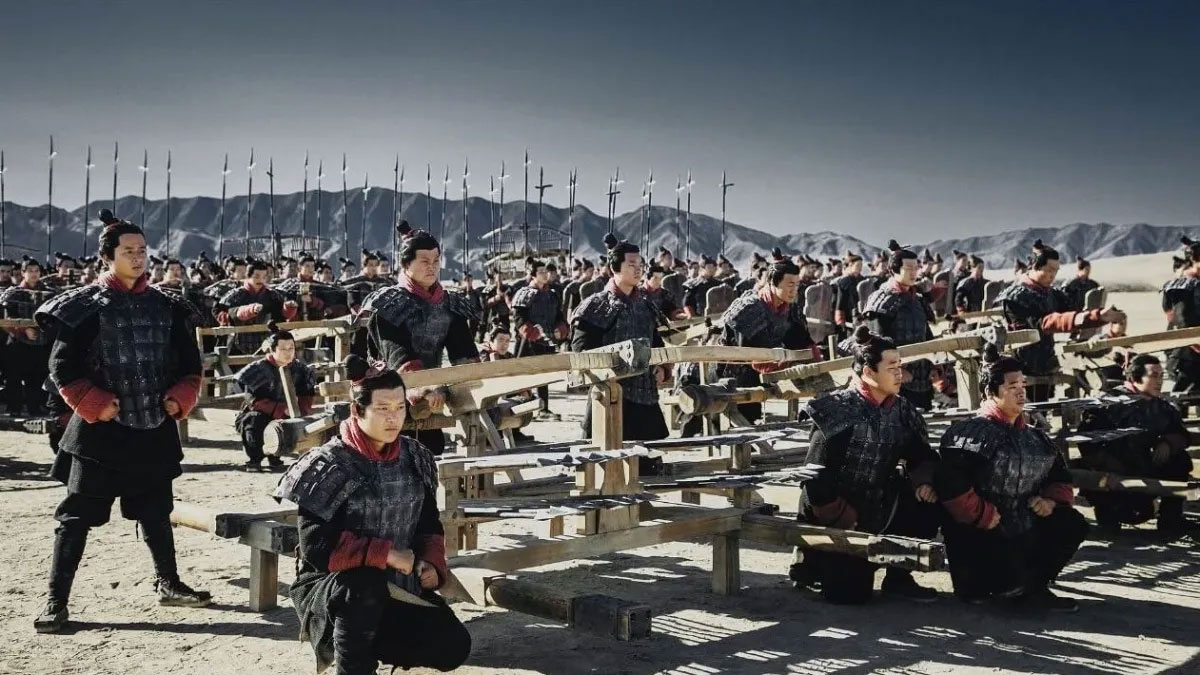
Knowing the main goal and the reason for their work helps every soldier fight better. Clear purpose builds strong trust. It guides smart choices during hard fights.
Picture courtesy of https://www.imdb.com/
They begin working for something they believe in.
Perhaps that is why I have never believed that people are a company’s greatest asset.
The right people, entrusted with the right purpose, are.
The Army that Forgot Why It was Fighting
Looking back, those two consultations were never really about employee engagement.
Nor were they about job redesign or artificial intelligence.
They were about something much deeper.
Purpose.
As consultants, we often help businesses reposition themselves in the marketplace. Yet sometimes, before repositioning the business, we first need to reposition the people within it.
Every customer interaction, every recommendation, every decision, and every promise fulfilled is ultimately carried out by someone wearing your company’s name.
As a service-focused organisation, your people are your brand.

And if your people cannot see a future in your business, why should they fight for its future?
Perhaps this is what Sun Tzu wanted us to remember when he wrote about The General (將).
Not simply to lead.
But to inspire.
Not simply to command.
But to understand.
Because the greatest danger to an army is not that it lacks capable soldiers.
It is that the soldiers have forgotten why they are fighting.
So perhaps the better question for every business owner is not:
“Do my people work hard enough?”
Perhaps it is:
“As the General of this organisation, have I given them a reason to fight beside me?”