


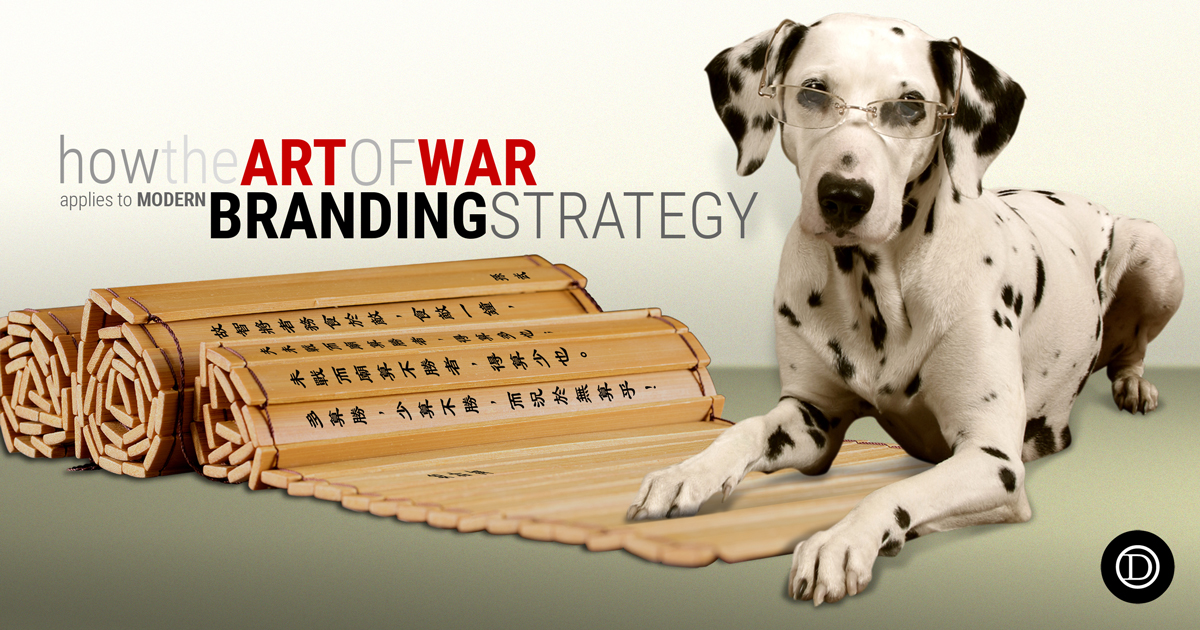
Few texts have travelled through time quite like Sun Tzu’s Art of War (孫子兵法). Often regarded as a legendary relic, it has been read, quoted, and reinterpreted across generations. Its influence runs so deep that 11 prominent historians, including Cao Cao (曹操), have each annotated it with their own perspectives in the Eleven Commentaries on Sun Tzu (孫子兵法 十一註).
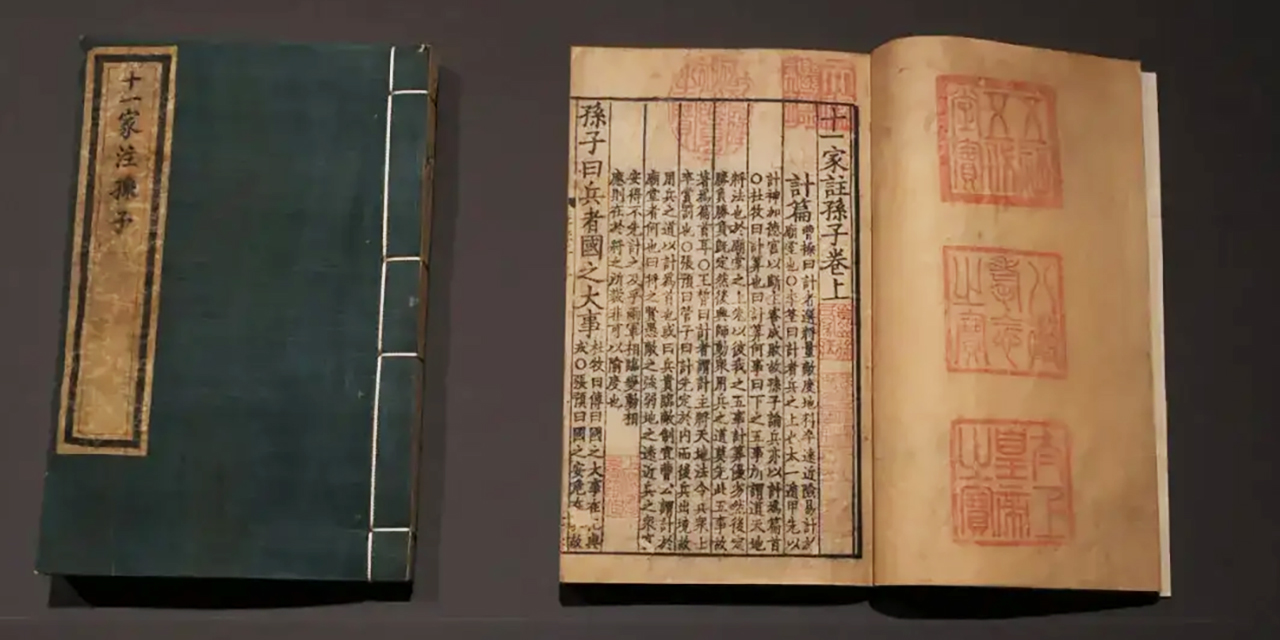
The original Song Dynasty woodblock print of “Eleven Commentaries on Sun Tzu”. Picture courtesy of https://www.sbksc.zcxn.com/
Which raises an interesting thought: if even great minds see it differently, perhaps the value of the text doesn’t lie in a single “correct” meaning—but in how we choose to apply it.
At Dalmatian, that’s exactly how we approach it. Not as a historical piece to admire, but as a practical lens. In many ways, the principles of Sun Tzu’s Art of War (孫子兵法) mirror what we now call branding strategy – the structured approach to building, positioning, and growing a business through clear brand positioning.
Where Strategy Begins
Sun Tzu started with what he called the Five Factors (五事) of war: Morality, Climate, Terrain, General, and Law (道, 天, 地, 將, 法). At first glance, they seem rooted in warfare. But in practice, they map almost directly to the foundations of branding.
The first, Morality (道), is about unity, ensuring people are aligned with a shared purpose before any move is made.
In business, this is often underestimated. It’s easy to assume alignment because everyone agrees in a meeting. But when stakeholders carry different expectations of what the brand should be, that misalignment eventually surfaces in messaging, decisions, and execution.

A brand doesn’t break because of poor design. It weakens when its people are not moving as one.
Reading the Environment
The second factor, Climate (天), traditionally refers to timing and external conditions. In today’s context, it’s less about seasons and more about market shifts, technology, and behaviour.
Consider how quickly industries evolve. Print once played a dominant role in marketing; today, digital platforms have reshaped how information is consumed. The shift didn’t happen overnight, but its impact was undeniable.

For businesses, the challenge is not just to react to change, but to recognise it early and adapt with intent as part of a strong branding strategy.
Designing for Real Behaviour
But beyond trends, there’s something even more important – understanding the audience. Sun Tzu’s principle of knowing both sides (知己知彼百戰不殆) can be reframed here: when you understand your audience clearly, engagement becomes far more deliberate and far more effective.
This led us to the next factor, Terrain (地). In warfare, it is about understanding the ground. In branding, it’s about understanding context — where and how people interact with the business.
One of our projects involved a tuition centre many years back; the client was facing a simple but persistent issue: noise along its corridor. A written sign asking for silence had little effect.
Instead of reinforcing the message, we shifted the approach. We introduced a large, friendly visual cue, a cartoon character signalling silence. No long message. No rules. Just a signal.

Why did it work? The difference wasn’t the instruction. It was the understanding of behaviour. Because we studied the “terrain” – the psychology of the children and parents in that environment. The result wasn’t just quieter surroundings. It drew attention, sparked curiosity, and even contributed to new sign-ups.
Branding isn’t just about visuals; it’s about designing for real-world behaviour.
Building with the Right Team
General (將), the fourth one, highlights leadership and capability. In today’s context, this reflects the strength of the people behind the brand.
It’s a straightforward idea, but one that is often overlooked. Misaligned roles, unclear direction, and inconsistent leadership often lead to internal strain and high turnover.
Strong brands are built by teams that understand their roles, take ownership, and execute with clarity. The right people don’t just deliver better work; they make the entire system work.

Consistency Builds Trust
Finally, Law (法) refers to structure, discipline, and governance. In branding, this translates to systems: identity, guidelines, processes, and standards that ensure consistency within a well-defined branding strategy. In Sun Tzu’s terms, it is what holds everything together.
This is where many brands lose coherence over time. Without a clear framework, messaging begins to drift, visuals become inconsistent, and service delivery varies across touchpoints.
Over time, inconsistency does more than just confuse; it weakens trust.
Consistency is not just aesthetic; it is the foundation of credibility that leads to loyalty. It is earned not through isolated moments, but through repeated, reliable experiences.
Preparation Before Execution
What ties these Five Factors (五事) together is simply a shared principle: Preparation.
Sun Tzu advocates calculating victory before entering battle (夫未戰而廟算勝者,得算多也). Only when the odds are favourable should action be taken. We adopt the same philosophy in Branding, as success is rarely the result of execution alone. It comes from understanding whether the fundamentals are in place – alignment, awareness, context, capability, and consistency.

When these elements are clear, execution becomes focused, which eventually makes failure far less likely. Without them, even the most creative ideas struggle to deliver results.
So, next time, don’t wait until you’re already in the market to figure things out. Calculate the odds before stepping in!
A Timeless Perspective
In here, we don’t see branding as decoration, not as a logo exercise, a campaign, or a one-time effort. We see it as a strategic approach to building strong, consistent brands.
Perhaps that’s why this 2,000-year-old text remains relevant today. It is not because it teaches conflict, but because it teaches perspective. Not how to fight, but how to think.
Sometimes, the most valuable frameworks aren’t new. They’ve simply stood the test of time and are waiting to be applied with the right intent.