



I often find myself in the middle of conversations where someone asks me,
“So… are you doing online or offline marketing?”
It’s a fair question — but one that reflects a widespread perception I’ve grown increasingly concerned about: that Marketing is seen as a deliverable, not a discipline. Most people equate marketing with media placement, social ads, EDMs, influencer collabs, or TikTok videos. And when I introduce myself as someone who consults in Branding and Marketing Strategy, the default assumption is that I run campaigns or buy ad space.
That recurring moment never fails to make me pause. Is it me? Have I missed something in the evolution of an industry I’ve spent decades in? Or has the definition of marketing quietly shifted, where execution is now mistaken for strategy?
The General VS The Strategist
I’ve always believed that marketing is a strategic function, not a reactive one.
To me, marketing is not about launching ads — it’s about positioning with purpose. It’s about moving through the market the same way a strategist moves through a battlefield: not just with firepower, but with foresight. If we borrow wisdom from ancient Chinese war tactics, the general may command the army, but it is the strategist who defines the direction of the war itself — often long before the first arrow is fired.
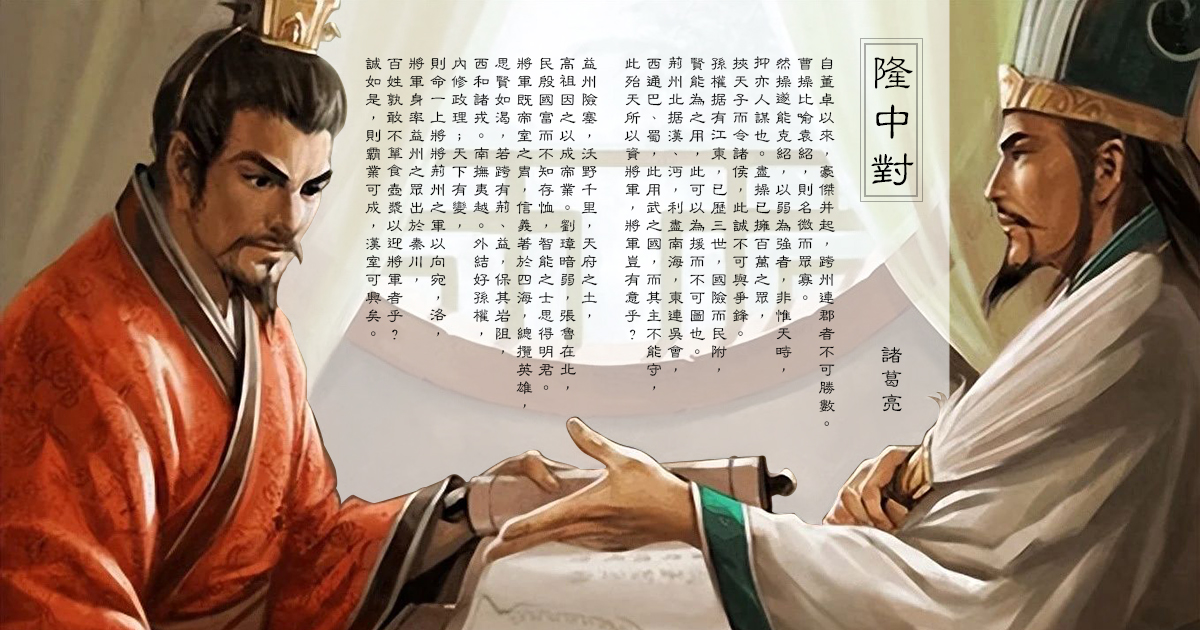
Zhuge Liang presented his well-thought-out strategy, Longzhongdui (隆中對), to Liu Bei. Picture courtesy of https://news.hubeidaily.net/
In classical warfare, strategists weren’t limited to battlefield formations. They operated beyond the physical frontlines — sowing political discord, spreading misinformation, destabilizing alliances, and even influencing the morale of enemy troops. Their value wasn’t in volume of attack, but in depth of thought.
Take Liu Bei, for example. Before the arrival of Zhuge Liang (also known as Kongming), his cause was noble, but his conquests were limited. It was only after Zhuge Liang joined as his chief advisor that the fragmented pieces of Liu Bei’s empire began to align into a more formidable force. It wasn’t brute strength that turned the tide — it was strategy. Zhuge Liang didn’t just guide Liu Bei on when to strike, but where to reposition, who to ally with, and how to earn legitimacy among the people. He gave direction to ambition.
The same applies in business. You may have a solid product, passionate leadership, and a committed team — but without strategic direction, the full potential remains untapped. Marketing deliverables may win short-term skirmishes, but strategy wins long-term ground.
Deliverables Are Tools — Not The Strategy
In today’s marketing landscape, I often see businesses rushing straight into execution:
“We need social media content!”
“Let’s buy some media spots.”
“Let’s launch a new campaign next month.”
 They invest in social media, SEO, SEM, influencer marketing, or branded content — not because of a strategic marketing roadmap, but because it’s what everyone else seems to be doing. These are tactical moves, not strategy. Without first understanding the market terrain, consumer behavior, competitive positioning, or even their own brand’s core essence, such actions often become scattershot. The result? Poor ROI, low traction, or mixed signals in the market. And when things fall flat, the default conclusion is: “Marketing doesn’t work.”
But imagine a battle fought without intelligence, without maps, and without knowing where the enemy lies. That’s what marketing without strategy looks like. When the terrain shifts — whether through trends, platforms, or competition — plans crumble. But with strategy, you gain the foresight to pivot, maneuver, and still win the game.
Just like a well-drawn battle map, a marketing strategy must study the terrain — the industry landscape, competitive threats, audience psyche, and internal readiness. Only then we choose the right formation – position the message, the product, or the brand where it will move hearts, shift perceptions, and inspire action.
Case Study: How A Shift In Strategy Opened A New Market

One case that stands out involved a distributor of high-performance, triple-glazed noise-reduction windows. Their product promised up to 90% sound insulation — an ideal solution for Singapore’s BTO flats located near MRT tracks. Initially, they focused on selling directly to residential homeowners, but the strategy hit a wall. The price point, nearly 50% higher than standard double-glazed windows, was simply too steep for the average HDB consumer.
They were using the right message, but aiming at the wrong battlefield.
Rather than pushing harder into a market constrained by cost sensitivity, we helped them reposition. The brand took a booth at a large industrial event — a modest 3m x 3m space — where we engineered a live experiential setup. Attendees could physically experience the difference in sound insulation, right there in the booth. No PowerPoint, no pitch — just proof.
That moment flipped the game. The experience went viral across the floor, and surprisingly, it wasn’t homeowners who came knocking — it was boutique hotel operators. They saw value in premium noise insulation as a guest experience differentiator. A pivot from B2C to B2B wasn’t part of the original plan, but the strategy allowed for adaptation. And that’s what made all the difference.

Picture courtesy of https://thescarletsingapore.com/
Strategy Is The Thinking That Leads The Doing
A good Marketing Strategy is never set in stone — it’s adaptive, like the best war tactics. It accounts for unpredictability, allowing space to pivot when the terrain changes. It’s not about sticking to a script; it’s about knowing when to press forward, when to pull back, and where to strike. Strategy gives meaning to motion.
When I work with clients, I don’t start with deliverables. I start by questioning:
- What is your current business model?
- What is the ultimate goal of engaging us?
- What makes your product or service truly unique?
- What challenges is your company currently facing?

These questions may seem simple, but the answers often reveal blind spots — assumptions that have gone untested, or pain points that no campaign can fix. Without clarity on the business itself, any marketing move is just a guess. I treat each project like a battlefield study — understanding both the internal structure and the external terrain before drawing the map. That’s when marketing becomes intentional. That’s when execution becomes powerful.
Every Battle Is Won Before It Is Fought(勝兵,先勝而後求戰)
That timeless insight from Sun Tzu captures the very heart of what marketing should be. Real strategy wins in the mind before the market. It begins with clarity, understanding, and conviction — long before the first ad runs or the first post goes live. It’s not about being seen. It’s about being remembered.

Bamboo slip of Sun Tzu’s Art of War.
Picture courtesy of https://chiculture.org.hk/
When businesses skip that step, they may still make noise — but it’s often unnecessary noise. Misdirected, forgettable, and easily drowned out in the chaos of competition.
As a strategist, my role is not to create for the sake of filling space. It’s to help brands communicate with intent, create with conviction, and move with meaning. Because when you know where you stand and where you’re going, every move becomes more than just marketing.
It becomes momentum.
So the next time someone asks me if I do “online or offline marketing,” maybe I’ll smile and say:
“I don’t sell ads. I plot your next move.”